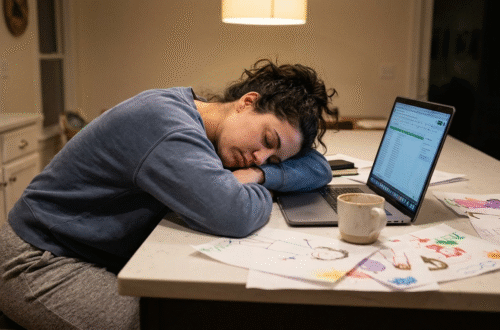

Okay, confession time: I used to be one of those “I’ll sleep when I’m dead” people. You know the type. Four hours of sleep, three cups of coffee by 9 AM, and somehow convinced I was being productive while literally forgetting what day it was. Spoiler alert: I wasn’t productive. I was just exhausted and making terrible decisions.
Here’s what nobody tells you about sleep-first productivity when you’re working from home with kids running around like tiny tornadoes. Your brain needs actual rest to function. Wild concept, right? But the data doesn’t lie, and my own life completely transformed when I finally figured this out.
According to research from the RAND Corporation, sleep deprivation costs the US economy $411 billion annually in lost productivity, with individuals sleeping less than 6 hours losing about 6 working days of productivity per year. And for remote working moms specifically? We’re carrying the double burden of work deadlines and family responsibilities while running on fumes. Something’s gotta give, and it shouldn’t be our health.
So lemme walk you through how sleep-first productivity for remote moms actually works in real life, not just in theory.
Why Your Current Productivity System Is Sabotaging You
Let’s get brutally honest for a second. How many times have you stayed up until midnight finishing a project, only to spend the next day feeling like a zombie and accomplishing basically nothing? Yeah, same.
The traditional productivity advice tells us to “hustle harder” and “maximize every hour.” But that’s garbage advice for working moms.
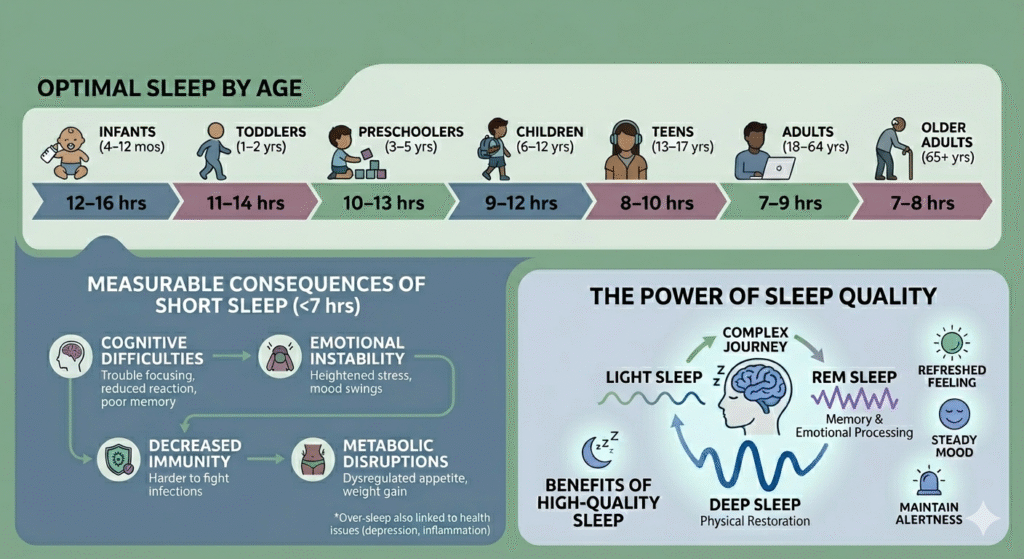
Here’s what sleep deprivation actually does to your work performance:
- Memory problems: Trouble remembering client names, meeting details, or what you just read five minutes ago
- Decision fatigue: Taking twice as long to make simple choices (like what to make for dinner or which task to tackle first)
- Reduced focus: Reading the same email three times and still not retaining the information
- Slower processing: Tasks that normally take 30 minutes suddenly take an hour
- More mistakes: Typos in important emails, missed deadlines, forgetting to attach files
According to Britannica, adults who sleep less than 7 hours per night show measurable decreases in reaction time, memory consolidation, and executive function.
I learned this the hard way when I sent an incomplete, unedited-sounding email to a client at 7pm. Not my finest moment, I know. It’s not even that late, but I’ve been at it since 7am. And that’s when it clicked: working tired isn’t working smart. It’s just working stupid with extra steps.
The Science Behind Sleep-First Productivity
Here’s where it gets interesting. A study published in the National Library of Medicine analyzed worker performance and found that individuals with insomnia or insufficient sleep had significantly higher presenteeism (being at work but not fully productive) and lost an estimated 11.3 days of productivity per year. That’s almost two full work weeks!
Your brain literally cleans itself while you sleep. During deep sleep, your brain’s glymphatic system flushes out toxins that build up during the day. Without enough sleep, those toxins accumulate and your cognitive function tanks. It’s like trying to run your computer with 47 tabs open and no RAM left.
Dr. Matthew Walker, neuroscientist and sleep researcher at UC Berkeley, has documented how sleep deprivation affects every system in your body, from immune function to emotional regulation. Not exactly the motivational quote we wanted, but definitely the one we needed to hear.
How to Actually Implement Sleep-First Productivity
Okay so the science is great and all, but how do you make this work when you’ve got client calls, deadlines, and a toddler who thinks 5 AM is a reasonable wake-up time?
Set Your Non-Negotiable Sleep Window
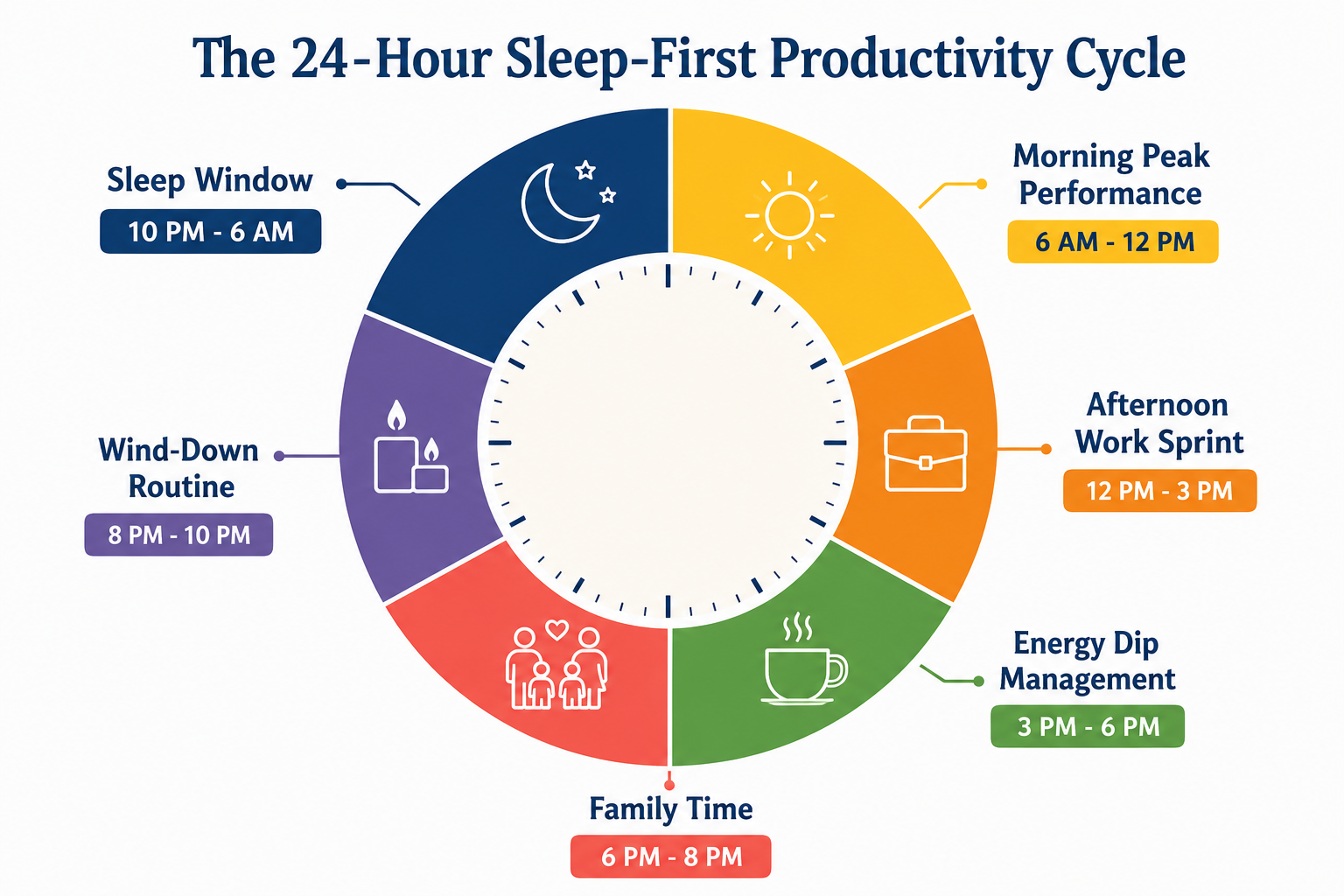
This was game-changing for me. Pick an 8-hour window for sleep and treat it like your most important meeting of the day. Mine is 10 PM to 6 AM. Is it perfect every night? Nope. But having that target makes a massive difference.
Why consistency matters more than perfection:
- Your circadian rhythm (internal body clock) thrives on predictability
- Going to bed at the same time helps you fall asleep faster
- Waking at the same time makes mornings less brutal
- Even weekends should stay within 1 hour of your regular schedule
- Your body starts preparing for sleep automatically when it knows the routine
The 90-Minute Work Sprint Method
Here’s a productivity hack that actually respects your biology. The human brain works in 90-minute cycles called ultradian rhythms. Work in focused 90-minute blocks, then take a real break. Not a “scroll Instagram while still thinking about work” break. A real one.
How to structure your 90-minute work sprints:
- Minutes 0-15: Start with easier tasks to build momentum (checking emails, organizing your workspace)
- Minutes 15-75: Deep focus on your most important task (no phone, no distractions)
- Minutes 75-90: Wrap up and document where you left off for next session
- After 90 minutes: Take a genuine 15-20 minute break (walk, stretch, snack, anything away from screens). Personally, I read.
When you’re well-rested, you can knock out more quality work in three 90-minute sessions than you could in eight hours of exhausted half-focused work. I’ve tested this quite a few times, and the difference is wild. My best writing always happens in the morning after a solid night’s sleep, not late in the afternoon or early evening fueled by desperation and cold coffee.
Create a Power-Down Routine
This is where most people mess up productivity for remote moms. You can’t just go from answering work emails to instant deep sleep. Your brain needs a transition period.
Your 60-minute wind-down checklist:
- 60 minutes before bed: Close your laptop and, if possible, physically put it in another room
- 45 minutes before bed: Dim the lights throughout your house
- 30 minutes before bed: Take a warm shower or bath (body temperature drop afterward signals sleep time)
- 20 minutes before bed: Do your brain dump in a notebook (get worries out of your head)
- 15 minutes before bed: Read something light (not work-related, not on a screen)
- Lights out: Same time every night
It is recommended to have a consistent bedtime routine to signal your brain that it’s time to wind down.
I know, I know, this is when you finally get “me time” to scroll TikTok. But hear me out. My power-down routine looks like this: Close laptop by 6 PM (or even earlier), do a quick tidy-up, take a warm shower, read for 20 minutes, and lights out by 10 PM, latest 11 (this is me because I’m over forty and I can’t sleep early). Some nights it works perfectly. Other nights, it doesn’t. But the routine exists, and that’s what matters.

Track Your Sleep Quality, Not Just Quantity
Getting 8 hours in bed doesn’t mean you got 8 hours of actual sleep. I started using a basic sleep tracker (my smartwatch, nothing fancy) and discovered I was waking up way more than I realized. Turns out, keeping my phone on my nightstand was destroying my sleep quality.
What to track for better sleep insights:
- Total time in bed vs. actual sleep time (the difference might surprise you)
- Number of times you wake up (even briefly)
- Sleep stages: light sleep, deep sleep, REM sleep percentages
- Wake-up feeling: rate how rested you feel on a scale of 1-10
- Nighttime habits: caffeine after 2 PM, screen time, stress levels
Research shows that exposure to electronic devices before bed suppresses melatonin production, shifts circadian rhythms later, and reduces next-day alertness.Translation: that late-night Instagram scroll is literally stealing your sleep and tomorrow’s productivity.
The Productivity Gains You’ll Actually See
Alright, so what happens when you prioritize sleep? Based from experience and backed by actual research, here’s what changes:
Your Sleep-First Productivity Timeline
Week 1-2: The Adjustment Phase
- You’ll probably feel weird and maybe even more tired as your body adjusts
- This is normal and expected (you’re paying back sleep debt)
- Stick with it even though it feels uncomfortable
- Your body is recalibrating its natural rhythms
Week 3-4: Decision-Making Improves
- Choices get easier and faster
- You stop standing in front of the fridge wondering what you came for (as often, anyway)
- Mental clarity starts returning
- Fewer “wait, what was I just doing?” moments
Month 2-3: Peak Performance Kicks In
- Projects get finished faster with fewer revisions needed
- Creative problem-solving improves noticeably
- You have actual energy to play with your kids after work
- Work feels less like slogging through mud
A study published in NIH found that chronic sleep restriction significantly impairs cognitive performance, with effects accumulating over time and not fully recovering even after three days of recovery sleep. This means the sleep debt you’re carrying isn’t just today’s problem, it’s affecting your entire week or month of productivity.

Common Obstacles and Real Solutions
Let’s address the elephant in the room: “But I literally can’t sleep because [insert valid reason here].”
Obstacle 1: “My kids wake me up constantly”
Real solutions:
- Sleep when they nap if possible (yes, even if dishes are piling up)
- Take turns with your partner for middle-of-the-night duties
- If breastfeeding, consider moving baby’s bassinet slightly farther from bed so every tiny sound doesn’t wake you
- White noise machines for everyone (kids AND you)
- Accept that with babies/toddlers, “good enough” sleep is sometimes the best you can do right now
Obstacle 2: “I have too much work to finish”
Real solutions:
- Track how long tasks actually take when you’re rested vs. tired (you’ll be shocked)
- Do a time audit for one week and see where time is actually going
- Batch similar tasks together during your peak energy hours
- The hour you “save” by staying up late costs you three hours of reduced productivity the next day
- Quality over quantity always wins
Obstacle 3: “I can’t fall asleep because my brain won’t shut off”
Real solutions:
- Brain dump everything onto paper 60 minutes before bed
- Keep the notebook next to your bed for middle-of-night thoughts
- Try the 4-7-8 breathing technique (breathe in for 4, hold for 7, out for 8)
- No problem-solving after 8 PM (seriously, just write it down for tomorrow)
- If you’re still awake after 20 minutes, get up and do something boring until drowsy
Research from Baylor University found that participants who spent 5 minutes writing a specific to-do list before bed fell asleep significantly faster than those who journaled about completed activities. The act of externalizing your thoughts literally helps your brain let go.
The Mindset Shift That Changes Everything
Here’s what really transformed my approach to sleep-first productivity: I stopped seeing sleep as lost time and started seeing it as my competitive advantage.
Every successful remote working mom I know who’s actually thriving (not just surviving) prioritizes sleep. They’re not superhuman. They just figured out that you can’t outwork basic biology.
Reframe sleep with these truths:
- Sleep is when your brain processes everything you learned today
- Sleep is when memories get consolidated and skills improve
- Sleep is when your body repairs itself physically
- Sleep is productive by definition, not despite it
- Well-rested you is your most valuable business asset
Your Action Plan for This Week
Don’t try to overhaul everything at once. Start small. Pick one thing from this list and commit to it for seven days:
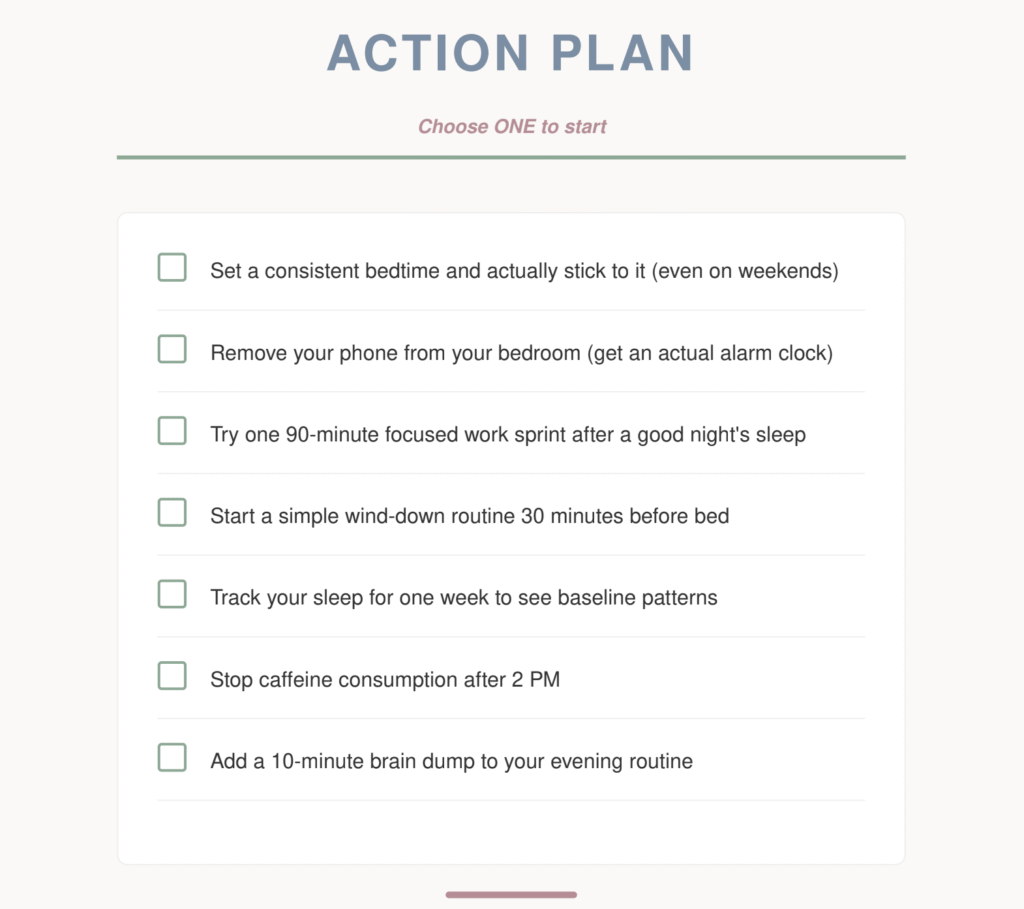
That’s it. One thing. Master that, then add another.
The irony of productivity culture is that it’s made us less productive by convincing us that rest is the enemy. But science doesn’t care about hustle culture. Your brain needs sleep to function, period.
So tonight, close your laptop an hour earlier than usual. The work will still be there tomorrow. But you’ll actually have the mental capacity to do it well instead of just getting it done while half-asleep and making mistakes you’ll have to fix later anyway.
What’s your biggest sleep challenge right now?